On 28th November in Vienna, we gathered experts from five continents to explore a deceptively simple question:
What will our children eat in 2050, and who will shape that future?
As the official side event of Future Forward, Austria’s leading innovation conference by weXelerate, the Vienna Institute for Global Studies (VIGS) brought together entrepreneurs, researchers, and impact leaders to examine the future of food and water through science, innovation, and policy. The concept and speaker lineup were developed collaboratively between VIGS and NetworkSmith.io, to create a diverse and truly global conversation.
Why this matters now
By 2050, the global population will exceed 9.7 billion. At the same time:
- Climate extremes are intensifying
- Arable land is shrinking
- Supply chains are increasingly fragile
- Inequality in access to food and water is widening
- 40% of food produced today is wasted
Technology—from AI-enabled agriculture to water-reuse systems—is advancing fast. But innovation alone isn’t enough. The challenge is aligning behavior, policy, markets, and culture with what science already tells us.
Opening Perspective: Moving Beyond Ideology

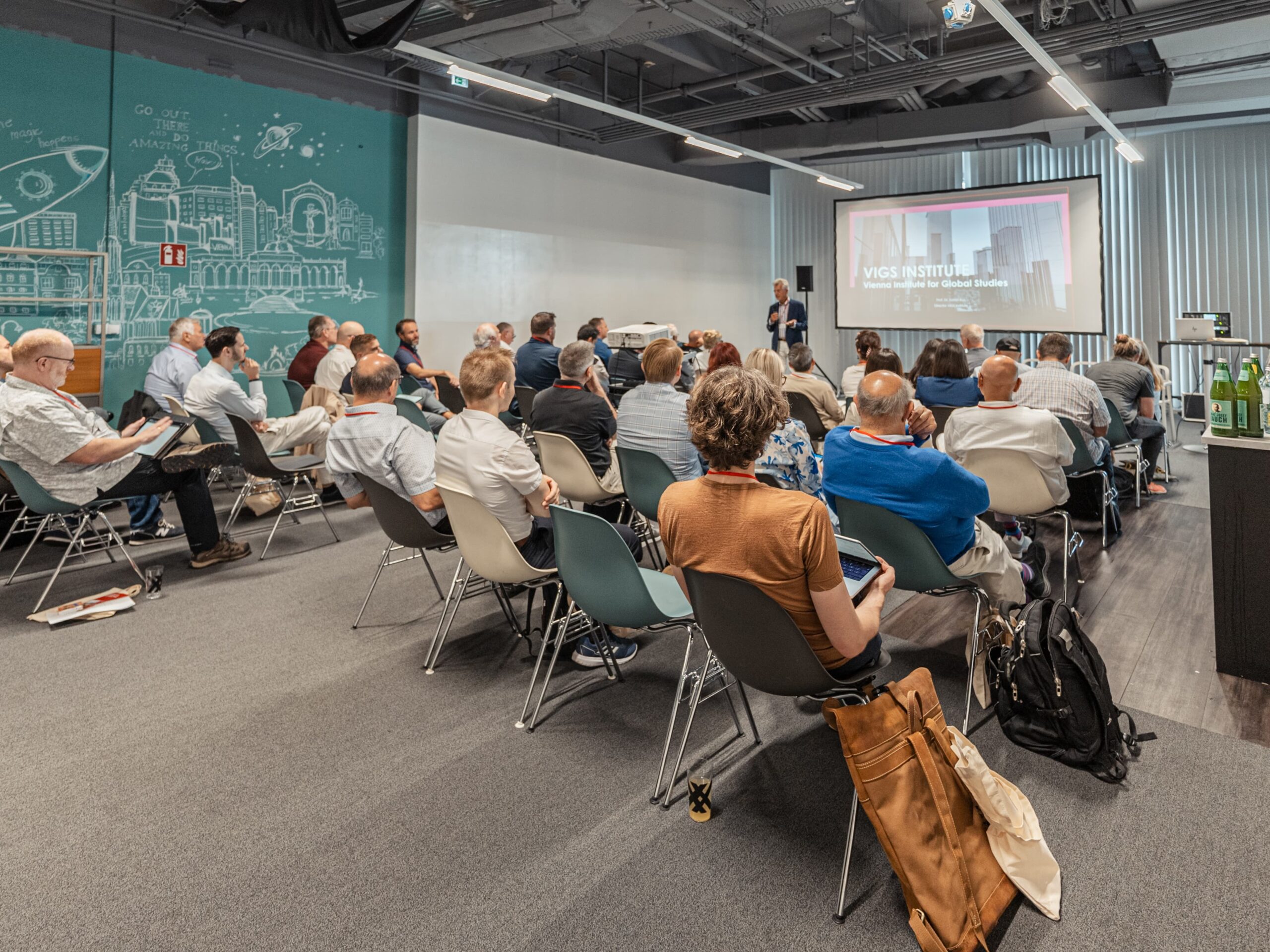
VIGS founder and director, Professor Dr. Zoltan Acs framed the event around three pillars central to understanding global change:
- Technology, innovation, and entrepreneurship
- Human well-being (including food quality, health outcomes, and inequality)
- Geopolitics
Food sits at the intersection of all three. Our current food system, he noted, is failing: ultra-processed diets, destructive farming practices, and systemic waste are eroding both planetary and human well-being.
Keynotes: Ethics, Data, and Climate Reality
1. Business Must Lead the Shift

Michele Orzan (President & Founder of EuCham – European Chamber ) highlighted the contradiction of abundance and hunger coexisting in the same global system.
His key argument:
The world’s largest balance sheets are not held by governments, but by businesses.
To empower better decisions, he shared the Greenwill, a one-page sustainability tool helping companies integrate environmental impact into daily operations. The goal is not perfection, but conscious decision-making.
2. We Now Live in a Water-Risk World

Shirley Ben-Dak, PMP (General Partner at Mazarine Climate) reframed climate change as a risk management crisis: floods, droughts, and water contamination are already reshaping land value, food production, insurance, and infrastructure. Her framework:
- Observe — through sensors, satellites, and citizen data
- Understand — using AI and digital twins
- Act — redesign systems around real, measurable risk
“We can’t manage what we don’t measure. And we can’t protect our children’s future with intuition alone.”
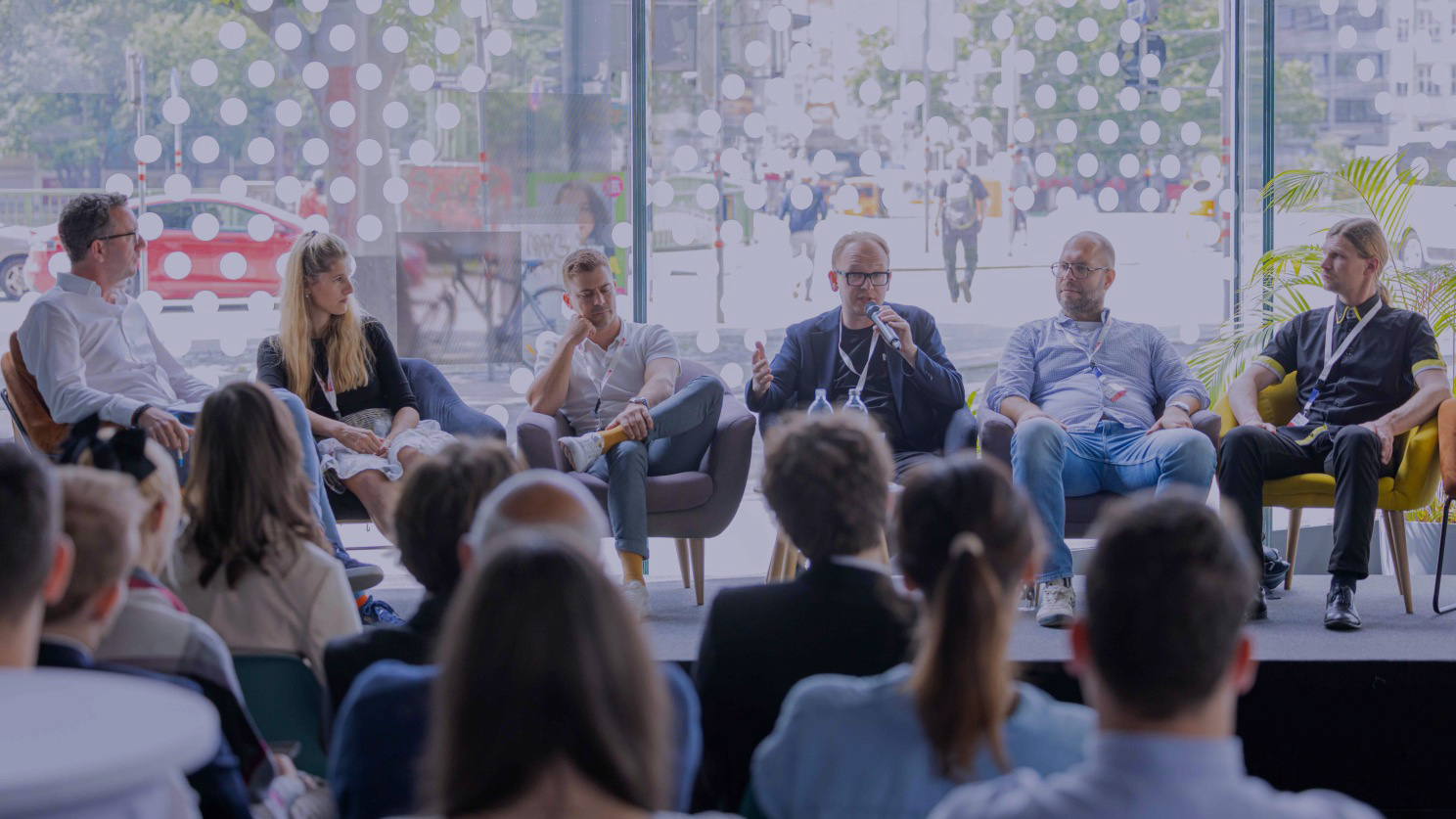
Global Panel: Five Entrepreneurs, Five Lenses on Food Systems

Moderated by Michele Orzan, the panel brought practical insights across different geographies and food systems:
🇯🇵 Kengo Kitaura (Founder of Agribuddy)
Small-scale farmers rarely have reliable data. Without it, planning and risk-sharing collapse. His work in Cambodia shows the need for mechanisation, better incentives, and new models of agricultural insurance.
🇵🇭 Dalareich Polot (Founder of Dalareich Chocolate House / Ginto Chocolates)
Cacao shortages, typhoons, and cultural knowledge loss threaten the chocolate industry. Dalareich empowers smallholder farmers and uses tools like QR-tagging to build climate resilience and preserve heritage.
🇨🇴 Jorge Correa (Founder & CEO Eatcloud)
EatCloud has redistributed 50,000+ tons of food — equivalent to 110 million meals — by connecting unsold food with charities, farmers, and recyclers. Technology + policy, he says, can eliminate hunger for millions.
🇿🇦 Flo Mosoane – (Founder & CEO Easy Chicken Club)
In South Africa, chicken is central to food security. Her decentralized micro-hubs help farmers process locally, create jobs, and stabilize income, showing how localized protein production strengthens resilience.
🇮🇱 Shirley Ben-Dak, PMP (GP Mazarine Climate)
In the panel, she emphasized that climate reality will increasingly determine what food is possible, not just what we prefer.
Cross-Cutting Insights
Across all speakers, three themes stood out:
1. Data is essential, but often inaccessible
Both farmers and consumers struggle to track information, yet without data, optimization and risk planning are impossible.
2. Culture matters as much as technology
The future must respect local food traditions while adapting them to climate constraints.
3. Responsibility is shared
Politicians respond to public pressure, corporations to incentives, and consumers to access and convenience. Real change requires system design, not guilt.
Final Question: What Will Our Children Eat in 2050?
The panel’s closing answers were both realistic and hopeful:
- Chocolate will still exist, if we protect farmers and heritage.
- The priority is ensuring all children can eat, not predicting the menu.
- Mechanization and risk-sharing will define availability.
- Climate conditions will shape diets more than personal choice.
- Localized, community-based production must become the norm.
The evening closed with a Filipino bean-to-bar chocolate tasting, made from cacao harvested just before a typhoon, a reminder of how climate, culture, and resilience are already intertwined.

A Final Thought
This event didn’t produce a single answer to the question. Instead, it made clear that the future of food is something we build, through:
- innovation
- policy
- community
- data
- and cross-border collaboration
Because the real question is not what our children will eat in 2050, but what we choose to change today so that they can eat well tomorrow.